Free auction valuations: send photos online or WhatsApp 07377 885 423.
Close

Silver Auctions & Valuations
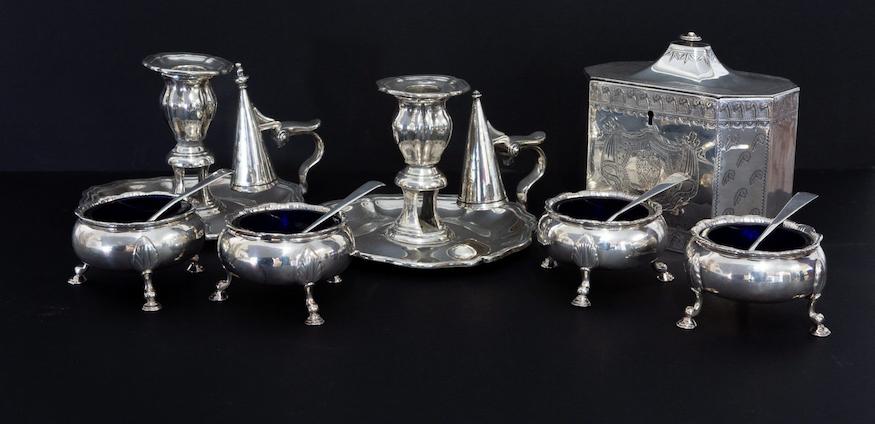
Thinking of selling silverware? Bishop & Miller offers free auction valuations for single pieces and collections. Whether you have a canteen of cutlery, a tea service or a few inherited objects, we can assess what you have and discuss its suitability for auction.
You do not need to know the maker, date or silver standard before contacting us. Clear photographs of the pieces and any marks give our team a useful place to start.
Contact

Russell Cole
Head of Probates & Valuer
Silverware we handle
Cutlery and table silver
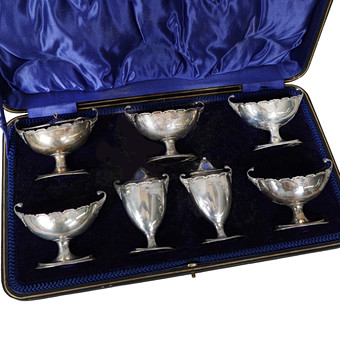
From individual spoons and forks to complete canteens, silver cutlery can be assessed as a single piece, a set or a collection. Tell us how many pieces you have and include any fitted case. If patterns or marks differ, show those differences in your photographs.
Tea wares and serving pieces
Tea and coffee services, trays, salvers, jugs and other serving pieces each need to be considered as a whole. Size and metal content matter, alongside the design, maker, condition and whether a group remains complete.
Decorative and personal objects
Smaller pieces can be worth asking about too. These include cases, boxes and dressing table items. A collection may span several periods and makers, so send an overview before trying to sort it into sale lots yourself.
Is it silver or silver plate?
Silver plate has a layer of silver over another metal. It is different from an object made from a silver alloy throughout. Colour alone is not enough to tell them apart, and plated items can carry stamps that look like hallmarks.
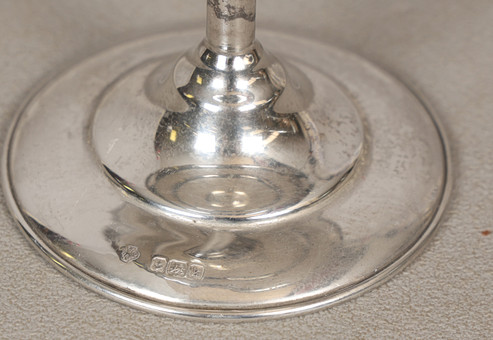
Photograph all the marks together, then take a closer view if your camera allows. Include marks on separate parts such as lids, as well as those on the main body. You can send an enquiry even if the marks are worn or you are unsure what they mean.
A metal standard such as 925 describes fineness: 925 parts of silver per thousand is sterling silver. A complete hallmark provides more information than a number alone. We consider the marks with the object, rather than treating one stamp as the whole answer.
Do not assume that every silver-coloured item has the same sale prospects. If a collection includes plate as well as silver, let us know so we can discuss what is suitable for auction.
What affects a silver valuation?
Maker, design and date
The person or firm associated with a piece, the quality of its making and its place in a period of design can all matter. A plain-looking object may still deserve a closer look. Share any previous catalogue entries or research, but do not worry if you have none.
Condition and completeness
Dents, splits, repairs and replacement parts should be included in an assessment. Tell us about engraving, missing pieces and any changes you know of. For a service or canteen, show its contents clearly so we can see what belongs together.
Metal content and the whole object
The silver content is part of the assessment, alongside the object’s appeal to buyers. A weight taken on household scales is only a starting point; it does not establish the amount of silver in a piece with other materials or components.
An auction estimate is a guide to what a piece may achieve. It is not a fixed offer or a promise of a particular result. If you are comparing sale routes, ask about the likely proceeds after fees as well as the estimate.
How to sell silver at auction
Start by sending photographs and a brief description. Include dimensions, the number of pieces in a set and anything you know about its history. Keep fitted cases and supporting records with the objects.
Our team will discuss whether an inspection is needed and which sale may suit the items. Before you consign, we will explain the estimate, reserve options and charges. See the selling guide for current terms and the ways to arrange a valuation.
If you have a large collection, explain where it is and roughly how much there is. There is no need to bring everything to a saleroom without first speaking to us.
For mixed precious-metal collections, our Silver & Gold department is the broader starting point. If your collection also includes gold objects, see our guide to selling gold at auction. Jewellery belongs with our jewellery team, while collectors’ coins are covered by Coins & Banknotes.
Inherited silver and probate
An inherited collection may contain pieces with very different histories and values. You can send one enquiry about the group, even if it includes other antiques. Keep any written valuations or family records, and tell us which objects they relate to.
If you need a formal valuation for an estate or for insurance, please say so before arranging an auction estimate. Our probate and insurance valuation service explains that route. We can then discuss selling separately, if that is what you decide to do.
Buying silver at auction
Look at the marks, dimensions and condition notes in the catalogue, as well as the main photograph. For sets, check the item count and the description of matching or associated pieces. Ask for more information where needed before bidding.
Our October 2026 Silver Auction catalogue gives a view of the range we have offered. It is a past sale, so use the auction calendar to check what is available now.
Read the buying guide and check all charges for the sale and bidding platform you choose. Include collection or delivery in your budget.
Your questions about selling silver
Should I clean it first?
There is no need to polish silver for the first photographs. Show its present condition and ask us before using harsh cleaners or carrying out repairs.
Can I sell one piece?
Yes, you can ask about a single piece. Its suitability for auction will depend on the object and the assessment, rather than the size of your collection.
What if I cannot read the marks?
Send the clearest photographs you can. You do not need to work out a date or maker yourself, and an inspection may help where photographs cannot show enough detail.
Request a silver auction estimate
Tell us what you have using the form below. Include photographs of the whole object and the marks, plus the number of items if it is a set or collection.
Tailored Auction Alerts
Please select all that apply and we'll send you alert when catalogues become available. You can update your alerts or unsubscribe at any time.
Please select...
Contact The Team